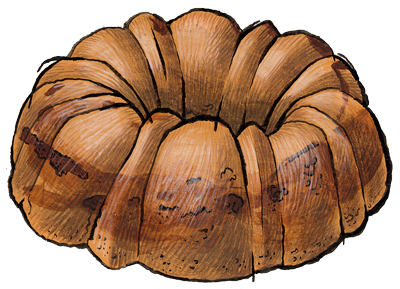
This is a Bakehouse classic and an early menu item at Zingerman’s Deli. It’s richly flavored with the best sour cream we can find, fresh eggs, award-winning Vermont Creamery Cultured Butter*, and our distinctive cinnamon-nut swirl made with Indonesian Korintje cinnamon, brown sugar, and freshly toasted walnuts. We bake this classic every day in a traditional Bundt pan giving it that classic coffee-cake look.
One question we get a lot: why is sour cream coffee cake considered Jewish? Some history: Yeasted coffee cakes, baked in kugelhopf pans, were somewhat common in European baking generally. As was often the case, Ashkenazi Jewish communities adapted local cuisines and made them their own. Ashkenazi coffee cake, most often made with sour cream, dates back to 17th-century Eastern Europe. Before modern-day refrigeration, milk was mostly consumed in a fermented form. Thus, sour cream, along with buttermilk, became essential elements in traditional Ashkenazi Jewish baking. Fast forward to 1950, when a group of Jewish women in Minnesota wanted to bring back some of the old Jewish coffee cake recipes. The women, thinking the European yeasted cakes were too time-consuming, transformed them into a more American pound cake style, and the sour cream coffee cake, as we now know it, was born. In contemporary Jewish homes, coffee cake is often served for breakfast on Shabbat and holidays.
*Vermont Creamery’s Unsalted Cultured Butter with 82% butterfat—our go-to butter—brings rich cultured flavor to our Coffee Cakes. It’s earned serious praise too—2nd-Place winner at the 2026 American Cheese Society (ACS) Competition and a near perfect score of 99.95 out of 100 at the 2024 World Championship Cheese Contest.